
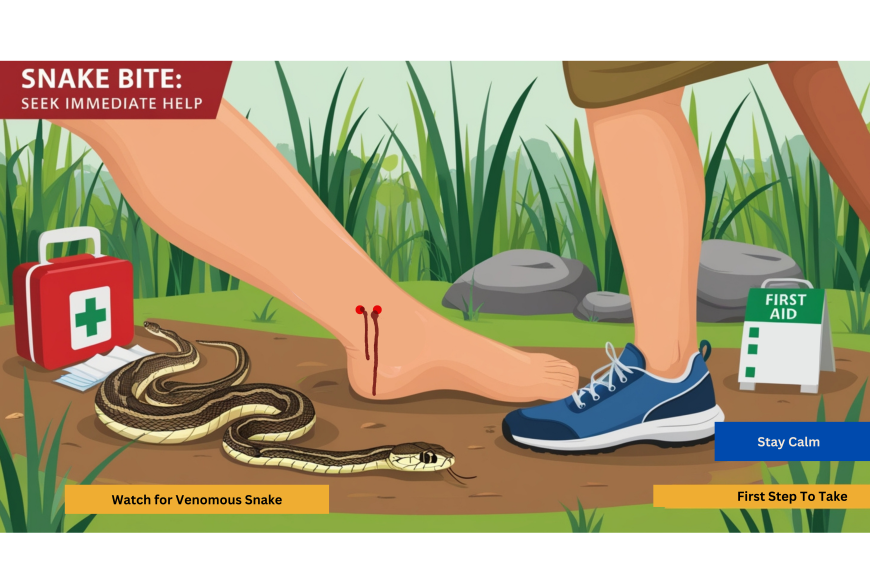
Snake Bites occur when a snake injects venom through its fang into a human or animal. While not all snakes are venomous, bites from venomous snakes can lead to severe health complications or death. The severity of a snake bite depends on factors such as the type of snake, the amount of venom injected, and the location of the bite.
Symptoms
Symptoms of a snake bite can vary widely depending on the snake species and the individual’s reaction. Common Symptoms include:
- Immediate Reaction:
- Pain and Swelling: Localized pain, swelling, and bruising around the bite site.
- Redness or Discoloration: The area may appear red or discolored.
- Systemic Symptoms (may develop later):
- Nausea and Vomiting: Some individuals may experience gastrointestinal distress.
- Difficulty Breathing: Respiratory issues may arise due to swelling or allergic reactions.
- Dizziness or Weakness: Generalized weakness or fainting can occur.
- Increased Heart Rate: Rapid heartbeat as the body reacts to venom.
- Numbness of Tingling: Sensation around the limbs or around the bite area.
- Severe Reaction (from venomous bites):
- Hemotoxic Symptoms: Damage to blood vessels and tissues, leading to internal bleeding or organ damage.
- Neurotoxic Symptoms: Muscle weakness, paralysis, or respiratory failure if the venom affects the nervous system.
- Anaphylaxis: Severe allergic reaction that can lead to shock, requiring immediate intervention.
Prevention
- Avoiding Snake Habitats:
- Stay away from tall grass, dense underbrush, and rocky areas where snakes may reside.
- Be cautious when hiking, camping, or exploring in nature.
- Wearing Protective Gear:
- Wear boots and long pants when in snake-prone areas to reduce exposure.
- Consider snake-proof gaiters for extra protection.
- Staying Alert:
- Watch where you step and be aware of your surroundings.
- Use a flashlight to avoid stepping on snakes.
- Educating Yourself:
- Learn to identify local snake species, especially venomous ones.
- Understand the signs of snake presence, like tracks or shedding skin.
Treatment
- Call for Help:
- Immediately seek medical assistance or call emergency services.
- Keep the Victim Calm:
- Keep the affected person as calm and still as possible to slow the spread of the venom.
- Immobilize the Affected Limb:
- Keep the bite area at or below heart level to reduce blood flow.
- Removing Tight Clothing and Jewelry:
- Loosen any constrictive clothing or jewelry to allow for swelling.
- DO NOT:
- Do not apply ice or a tourniquet.
- Avoid cutting the wound or attempting to suck out venom.
- Do not administer alcohol or caffeine.
- Antivenom Administration:
- At the hospital, the doctor may administer antivenom, which can neutralize venom from certain types of snakes.
- Supportive Care:
- Treatment may also include pain management, fluid therapy, and monitoring for complications.
People who might get Snake Bites include:
- Outdoor Enthusiasts: Hikers, campers, and rock climbers are at higher risk when traveling in natural habitats.
- Children: Young kids playing in yards or parks inadvertently disturb snakes.
- Agricultural Workers: Farmers and laborers working in the field may encounter snakes while handling crops.
- Wildlife Researchers: Those studying snakes or other wildlife may come into close contact with them.
- Pet Owners: People with pets that roam outdoors can be at risk if their animals provoke a snake.
- Nighttime Wanderers: Those walking in the dark, particularly in areas known for snakes, may be more prone to bites.
Key Point
Snake bites can pose serious health risks, but understanding symptoms, prevention strategies, and appropriate treatments can greatly improve outcomes. If you or someone else is bitten, seek medical attention immediately, and stay calm to minimize the effects of the venom. Always prioritize safety when in areas where snakes may be present.