
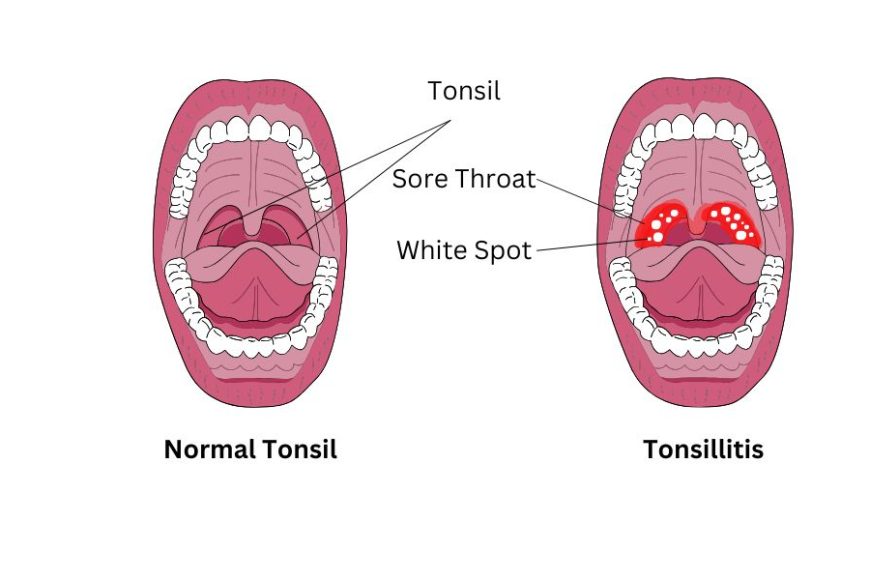
Acute Tonsillitis is an inflammatory condition affecting the tonsils, which are two oval-shaped masses of lymphoid tissue system located at the back of the throat. The primary function of the tonsil is to act as a part of the immune system, helping to filter out bacteria and viruses that enter the body through the mouth or nose. Acute tonsillitis can be triggered by various pathogens, primarily viruses (like the common cold or influenza) and bacteria (such as Streptococcus pyogenes). While tonsillitis can occur at any age, it is most prevalent in children and adolescents, often leading to significant discomfort and disruption of daily activities.
Symptoms
Acute tonsillitis presents with a range of symptoms that can vary in severity:
- Sore Throat: One of the earliest and most prominent symptoms, often worsening with swallowing.
- Swollen Tonsils: The tonsils may appear enlarged, reddened, and covered with white or yellow patches of pus.
- Dysphagia: Difficulty swallowing due to throat pain and swelling.
- Fever: Patients often experience a high fever, which may be accompanied by chills.
- Halitosis: Bad breath is common due to the infection.
- Ear Pain: Referred pain can occur, making the ears feel uncomfortable.
- Swollen Lymph Nodes: Tender lymph nodes in the neck can be felt upon examination.
- Headaches: General discomfort and pain may manifest as headaches.
- Fatigue and Malaise: A general feeling of unwellness and tiredness is common.
Prevention
Preventing acute tonsillitis involves several strategies aimed at reducing exposure to pathogens and enhancing immune health:
- Good Hygiene Practices: Regular handwashing with soap and water can significantly reduce the spread of infections.
- Avoid Close Contact: Limit interaction with individuals who exhibit symptoms of respiratory infections.
- Do not Share Personal Items: Avoid sharing utensils, cups, and personal items that may carry germs.
- Healthy Lifestyle Choices: A balanced diet rich in vitamins and minerals, regular exercise, and adequate sleep can help maintain a robust immune system.
- Stay Hydrated: Drinking plenty of fluids can help keep the throat moist and assist in overall health.
Treatment
Treatment for acute tonsillitis focuses on symptom relief and addressing the underlying cause:
- Symptomatic Relief: Over-the-counter medications like acetaminophen or ibuprofen can help reduce fever and alleviate throat pain.
- Hydration: Encouraging fluid intake is crucial; warm fluids like broths or herbal teas can be soothing.
- Warm Saltwater Gargles: Gargling with warm salt water several times a day can reduce throat inflammation and provide temporary relief.
- Throat Lozenges: These can help numb the throat and ease discomfort, particularly for adults and older children.
- Antibiotics: If a bacterial infection is confirmed through throat culture or rapid testing, antibiotics such as penicillin or amoxicillin may be prescribed to clear the infection.
- Corticosteroids: In several cases, a doctor may prescribe corticosteroids to reduce swelling and inflammation.
- Tonsillectomy: For Individuals with recurrent episodes of tonsillitis or complications, surgical removal of the tonsils may be recommended.
People Who Might Get It:
- Children and Adolescents: Most commonly affected, particularly between the ages of 5 to 15, due to their developing immune systems and increased exposure to pathogens in schools.
- Individuals with Weakened Immune Systems: Conditions that compromise the immune response (like HIV/AIDS, cancer, or autoimmune diseases) can increase susceptibility.
- Those with Frequent Upper Respiratory Infections: Individuals who often experience colds or other respiratory infections may have a higher likelihood of developing tonsillitis.
Key Points
Acute tonsillitis is the inflammation of the tonsils, usually due to viral or bacterial infections. Key symptoms include a sore throat, difficulty swallowing, fever, and swollen lymph nodes. Diagnosis often involves a physical exam and potentially a rapid strep test. Treatment typically focuses on symptom relief for viral infections, while bacterial cases may require antibiotics. Though complications are rare, they can occur. Prevention measures include good hygiene, and in severe or recurrent cases, a tonsillectomy might be recommended.