
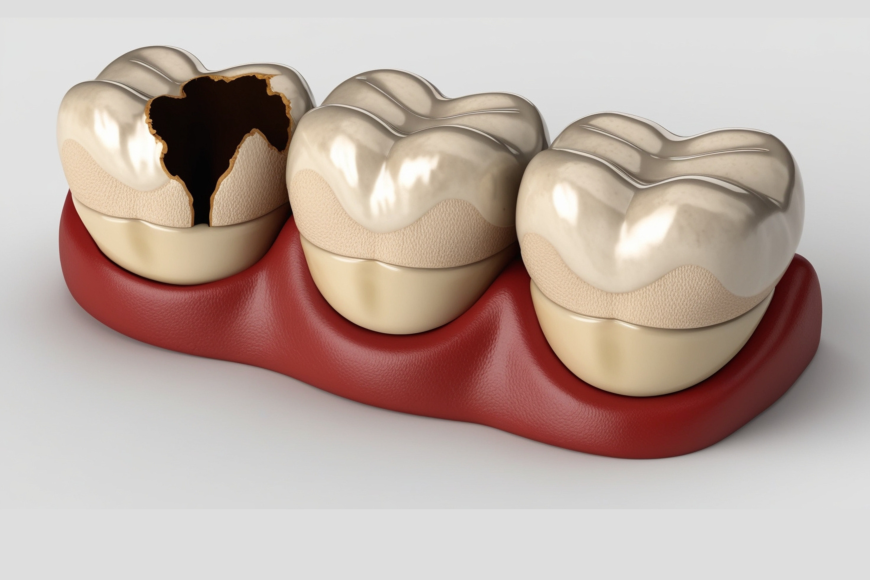
Cavities, also known as dental caries or tooth decay, are permanently damaged areas in the hard surface of teeth that develop into tiny openings or holes. They are primarily caused by a combination of factors, including bacteria, sugary foods, and poor oral hygiene.
Symptoms
- Toothache: Persistent pain or sensitivity, especially when eating or drinking hot, cold, or sweet substances.
- Visible Holes or Pits: Noticeable holes in the affected teeth.
- Staining: Dark spots or discoloration on the tooth surface.
- Sensitivity: Increased sensitivity to temperature changes or sweet foods.
Prevention
- Good Oral Hygiene: Brush teeth at least twice a day with fluoride toothpaste and floss daily.
- Regular Dental Check-ups: Visit the dentist regularly for cleanings and examinations to catch issues early.
- Limit Sugary Foods and Drinks: Reduce the intake of sugary snacks and beverages, especially between meals.
- Fluoride Treatments: Use fluoride toothpaste and consider professional fluoride treatments to strengthen enamel.
- Dental Sealants: Apply protective sealants on the chewing surfaces of back teeth to prevent decay.
Treatment
- Fillings: Cavities are often treated with dental fillings, where the decayed portion is removed and filled with materials like composite resin or amalgam.
- Crowns: In cases of extensive decay, a crown may be placed over the tooth to restore its shape and function.
- Root Canal: If decay reaches the tooth’s pulp, a root canal may be necessary to remove infected tissue.
- Preventive Care: Ongoing preventive measures, including good oral hygiene practices and dietary changes.
People who might get Cavity include:
- Children and Adolescents: Increased sugar intake and developing hygiene habits.
- Older Adults: Higher likelihood of dry mouth and health issues.
- Individuals with Poor Oral Hygiene: Inconsistent brushing and flossing.
- Sugar Enthusiasts: Frequent consumption of sugary foods and drinks.
- Smokers: Increased risk of gum disease and decay.
- Individuals with Braces: Difficulty in cleaning around dental appliances.
Key Point
Cavities are a prevalent dental issue that can lead to significant complications if left untreated. However, they are largely preventable through good oral hygiene, a healthy diet, and regular dental care. Understanding the causes, symptoms, and preventive measures is essential for maintaining optimal oral health. If you have specific concerns about cavities or dental health, consulting a dentist is highly recommended for proper diagnosis and treatment tailored to your needs.