
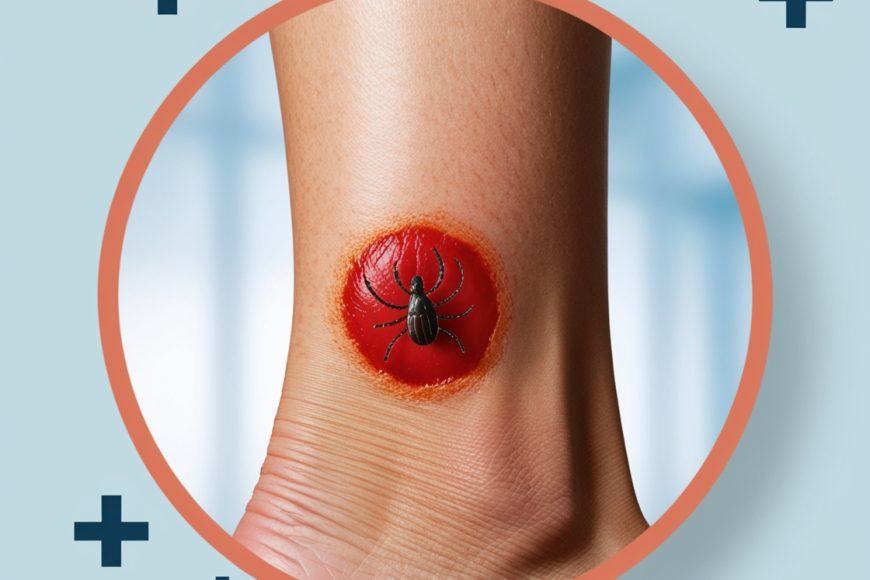
Lyme disease was first identified in the 1970s in Lyme, Connecticut when a cluster of cases of arthritis in children led researchers to discover the tick-borne infection. It’s caused by the spirochete bacterium Borrelia burgdorferi, which is transmitted primarily through the bite of infected black-legged ticks (Ixodes scapularis) in the northeastern and north-central US, as well as the western black-legged tick (Ixodes pacificus) on the West Coast.
Symptoms
Early Symptoms
Symptoms may appear anywhere from 3 to 30 days after a tick bite and can include:
- Fever and Chills: Often mild and may be accompanied by fatigue.
- Fatigue: A common early symptom that may last throughout the illness.
- Muscle and Joint Aches: General discomfort and stiffness.
- Erythema Migrans: The hallmark rash associated with Lyme disease, which resembles a “bull’s eye” pattern with a red ring surrounding a lighter center. However, not all patients develop this rash.
Late Symptoms
If left untreated, Lyme disease can progress to more severe stages, manifesting symptoms such as:
- Neurological Issues: These may include headaches, neck stiffness, and sometimes, memory problems or difficulty concentrating.
- Cardiac Issues: Lyme carditis can occur, leading to irregular heartbeats (heart block).
- Arthritis: Particularly in large joints like the knees, with severe pain and swelling episodes.
- Other Rashes: Additional rashes may develop in different areas of the body.
Prevention
- Avoiding Tick Habitats: Stay on trails in wooded or grassy areas and avoid grass and dense brush.
- Protective Clothing: Wear long sleeves, long pants, and light-colored clothing to make it easier to spot ticks.
- Insect Repellent: Use products containing DEET or picaridin on exposed skin and clothing.
- Tick Checks: Perform thorough body checks after spending time outdoors, focusing on hidden areas like behind the ears, under the arms, and around the waist.
- Tick Removal: Use fine-tipped tweezers to grasp the tick as close to the skin’s surface as possible and pull upward steadily without twisting. Clean the area afterward.
Treatment
- Early Lyme Disease: Oral antibiotics such as doxycycline, amoxicillin, or cefuroxime axetil for 10 to 21 days.
- Late Lyme Disease: More severe cases, particularly those involving neurological symptoms or carditis, may require intravenous antibiotics for 14 to 28 days.
People who might get Lyme disease
- Outdoor Enthusiasts: Hikers, campers, and anyone spending time in wooded or grassy areas.
- Children: More likely to play outside and may not recognize tick dangers.
- Pet Owners: Pets can carry ticks indoors, increasing exposure risk.
- Residents of Endemic Areas: People living in regions where Lyme disease is common.
- Outdoor Workers: Forestry workers, farmers, and landscapers frequently in tick-prone environments.
Key Point
Individuals at higher risk for Lyme disease include outdoor enthusiasts such as hikers and campers, children who play outside, and pet owners, as pets can carry ticks indoors. Residents of areas where Lyme disease is common, as well as outdoor workers, are also at increased risk. Additionally, those who participate in outdoor recreational activities like fishing or hunting, along with immunocompromised individuals, may face a greater likelihood of infection. Preventive measures, such as wearing protective clothing, using tick repellents, and conducting regular tick checks, are essential for those groups.