
Frostbite is a serious condition that occurs when the skin and underlying tissues freeze due to prolonged exposure to extremely cold temperatures. It most commonly affects extremities such as fingers, toes, ears, and the nose. When the body is exposed to cold, it restricts blood flow to preserve core temperature, which can lead to tissue damage if exposure continues.
Symptoms
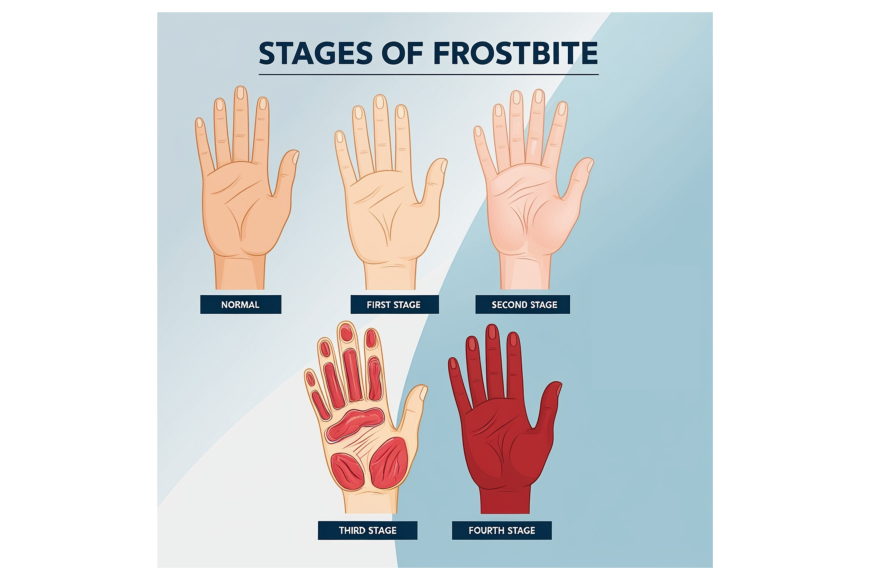
Frostbite symptoms progress through stages, beginning with cold sensations and potentially leading to severe tissue damage if not addressed promptly. The symptoms of Frostbites are:
- First Degree
- Cold skin and tingling
- Redness and slight swelling
- Mild numbness that resolves with warming.
- Second Degree
- Blisters filled with clear fluid
- Skin appears pale or white.
- Increased numbness and hardness of the skin.
- Third Degree
- Blisters may be filled with blood.
- The skin turns grayish or black.
- Loss of sensation; affected areas feel cold and hard.
- Fourth Degree
- Deep tissue damage affects muscles and bones.
- Blackened, necrotic tissue with no sensation.
- Potential for permanent damage or amputation.
Prevention
- Dress Appropriately
- Layering: Wear multiple layers of clothing to trap warmth, including thermal underwear, insulated outer layers, and waterproof materials.
- Accessory Items: Use of gloves or mittens, warm hats, and thick socks to protect extremities.
- Limit Exposure
- Take breaks indoors or in sheltered areas during extreme cold to allow the body to warm up.
- Avoid staying outside for prolonged periods in freezing temperatures, especially during windy conditions.
- Stay Dry
- Wet clothing can increase heat loss. Change wet clothes immediately and ensure that socks and gloves remain dry.
- Avoid Alcohol and Tobacco
- Both substances can impair circulation and increase the risk of frostbites by causing blood vessels to constrict.
Treatment
- Seek Warmth
- Gradual Rewarming: Immerse the affected areas in warm (not hot) water (about 37-39°C or 98.6-102.2°F) for 30-45 minutes. Avoid direct heat sources like stoves or heating pads, as they can cause burns.
- Avoid Rubbing
- Do not rub or massage frostbitten areas, as this can cause further tissue damage.
- Medical Attention
- For severe frostbites, seek immediate medical care. Healthcare providers may administer medications to manage pain, prevent infection, or promote blood flow.
- Pain Relief
- Over-the-counter pain relievers (like ibuprofen or acetaminophen) can help manage discomfort during recovery.
- Monitor for Complications
- After rewarming, monitor the affected areas for signs of infection or necrosis. Follow up with a healthcare professional for evaluation and management if necessary.
People who might get Frostbites include:
- Outdoor Enthusiasts: Hikers, skiers, and snowboarders, especially in extreme cold.
- Workers in Cold Environments: Construction workers, agricultural laborers, and emergency responders.
- Homeless Individuals: Those without adequate shelter during winter months.
- Campers and Backpackers: Not properly equipped for cold overnight temperatures.
- Mountaineers and Climbers: Engaging in high-altitude activities in extreme cold.
Key Points
Frostbite is a cold-related injury that occurs when the skin and underlying tissues freeze. It typically affects areas like fingers, toes, ears, and the nose. It can result from prolonged exposure to cold, wet conditions, especially in windy environments. Early symptoms include coldness, tingling, and redness, progressing to numbness and hardening of the affected areas. Prevention involves wearing appropriate clothing and monitoring for signs of frostbite, while treatment includes gradually warming the affected areas and seeking medical help for severe cases to avoid complications.